
How to Do Your Own Termite Treatment in Alabama: The Trench and Treat DIY Guide
- Stephen Darnell
- Jan 21
- 5 min read

I get it: termite treatment quotes can make your wallet hurt, and you're thinking, "How hard can this really be?" As someone who's worked in pest control across Walker County for years, I've seen plenty of Alabama homeowners tackle their own termite problems. Let me walk you through the trench and treat method that many DIYers swear by, while also giving you the honest truth about what you're getting into.
What Exactly is the Trench and Treat Method?
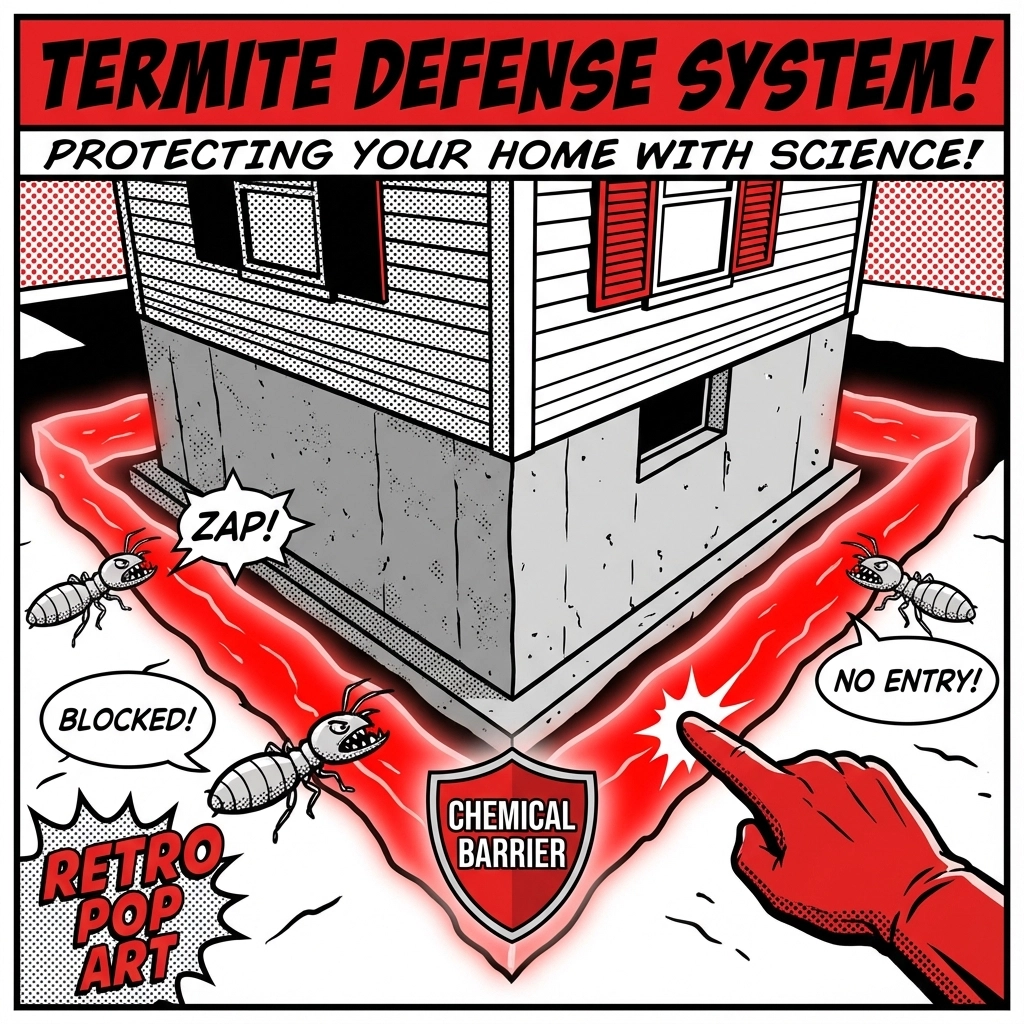
The trench and treat method is basically creating a chemical moat around your house. You dig a trench along your foundation, fill it with diluted termiticide, then cover it back up. The idea is simple: termites trying to reach your home's wood have to pass through this treated soil barrier, which either kills them or repels them entirely.
This method has been the gold standard for termite control for decades because it creates a long-lasting protective barrier. When done correctly, it can protect your home for 5-10 years. But here's the thing: "when done correctly" is doing a lot of heavy lifting in that sentence.
Materials You'll Need for the Job
Before you start digging up your yard, let's talk about what you'll actually need:
Tools:
Shovel (preferably a trenching spade)
5-gallon buckets (at least 3-4 of them)
Garden hose
Measuring tape
String line or chalk for marking
Chemicals:
EPA-registered liquid termiticide (Taurus SC, Termidor, or similar)
Water for dilution
Safety Gear:
Chemical-resistant gloves
Long pants and long sleeves
Safety glasses
Dust mask or respirator
Most liquid termiticides you can buy need to be mixed at a rate of about 0.8 fluid ounces per gallon of water. This creates what we call the "finished dilution" that actually goes into your trench.
The Step-by-Step Trenching Process
Step 1: Mark Your Perimeter
Walk around your entire house and mark where you'll dig. You need to trench everywhere the foundation meets the soil: that means around the entire perimeter, including porches, stoops, and any concrete slabs.
Use string or chalk to mark a line about 6 inches away from your foundation. This gives you working room and ensures you're not digging right against your house.
Step 2: Start Digging
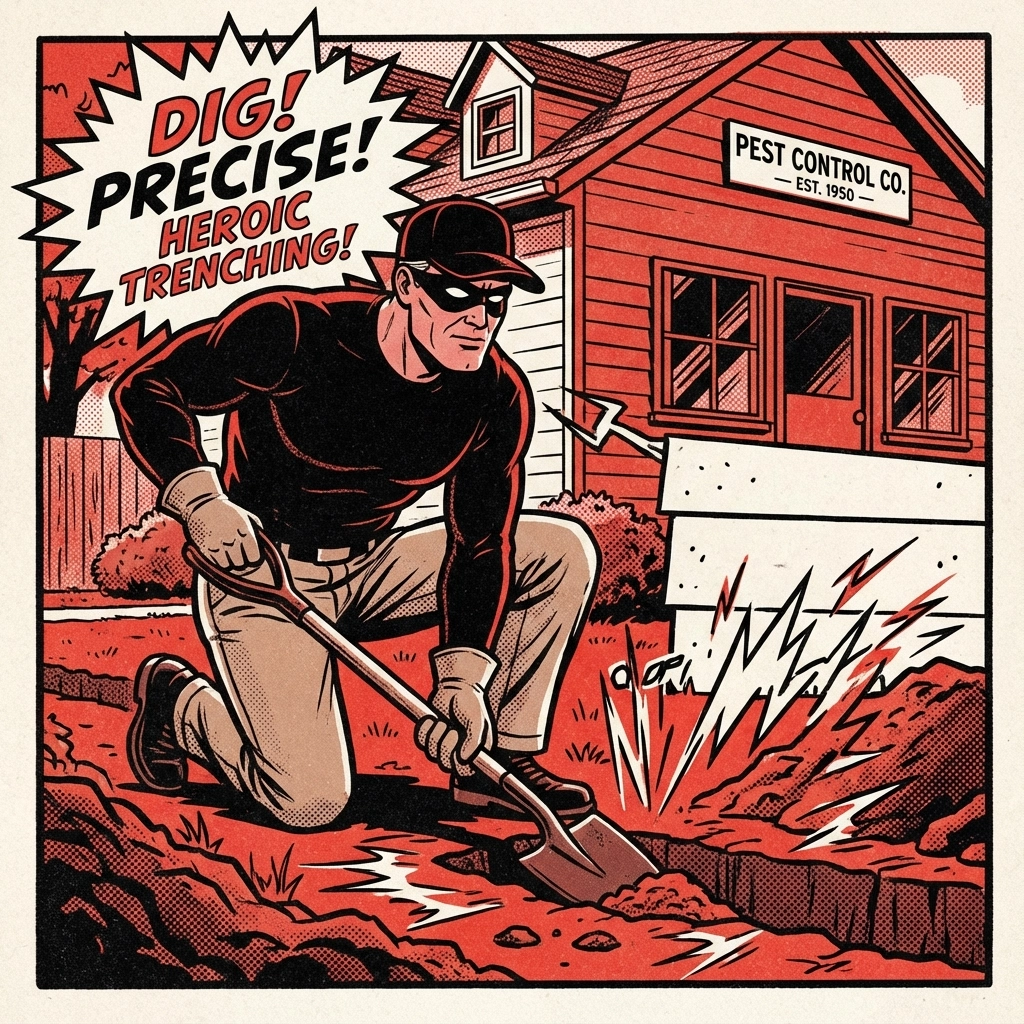
Here's where the real work begins. You need to dig a trench that's:
6 inches wide
10 inches deep (minimum)
Continuous around your entire house
I won't sugarcoat this: digging 200+ feet of trench by hand is exhausting work. Most homeowners underestimate just how much digging is involved. A typical house requires 150-300 feet of trenching, which can take a weekend or more depending on your soil conditions.
Alabama clay soil can be particularly challenging, especially if it's been dry. You might want to water the area a day before to soften it up.
Step 3: The Chemical Calculation and 5-Gallon Bucket Method
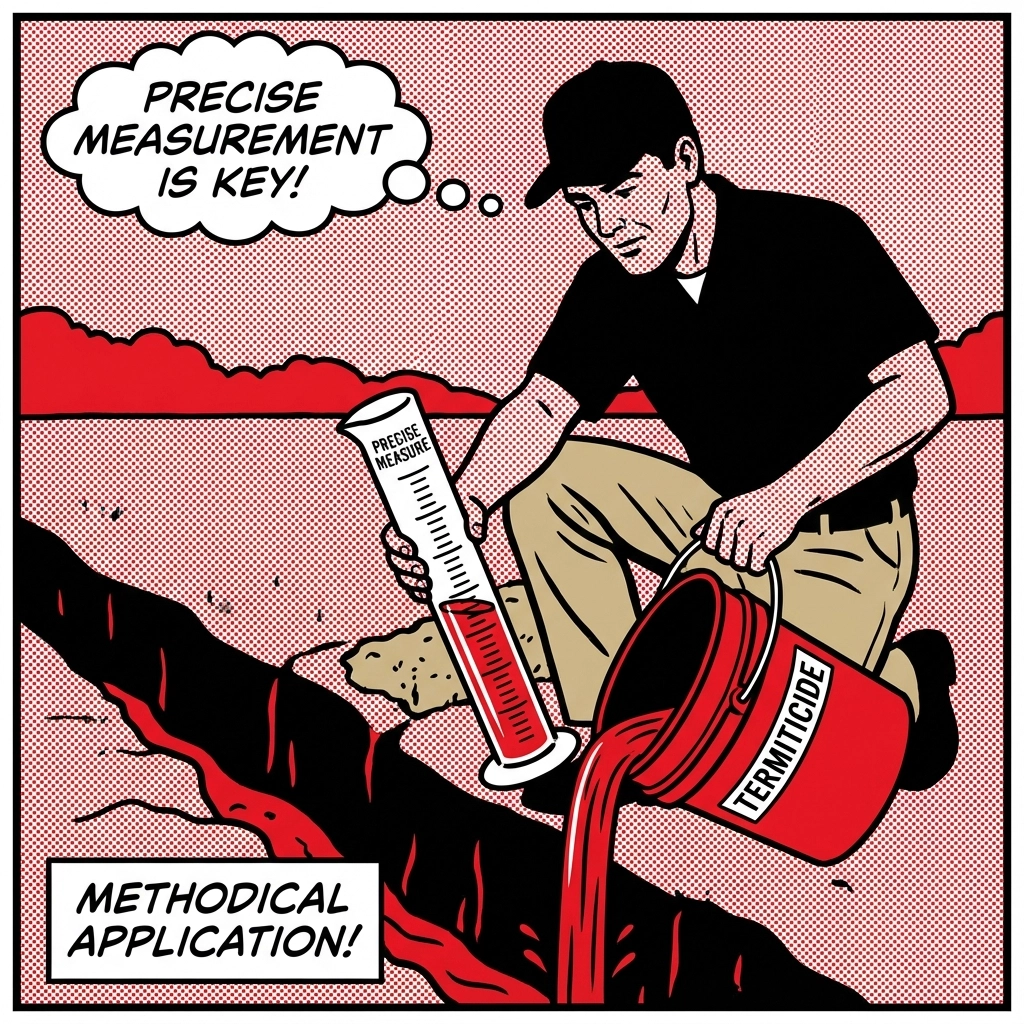
Now for the chemistry lesson. Most termiticides require 4 gallons of finished dilution per 10 linear feet of trench. So if you have 200 feet of trench, you'll need about 80 gallons of diluted chemical.
Here's the 5-gallon bucket method I recommend:
The math works out to roughly 0.4 gallons of finished solution per linear foot of trench. So a 10-foot section gets 4 gallons, a 25-foot section gets 10 gallons, and so on.
Safety Considerations for Alabama Weather
Alabama's humidity and heat make safety even more critical. Here's what I've learned working in our climate:
Timing matters: Don't do this work during the hottest part of the day. Early morning or late afternoon is best. You'll be wearing protective gear, and heat exhaustion is real.
Hydration is key: Drink water constantly. This is hard physical work in protective clothing.
Weather awareness: Don't apply chemicals if rain is expected within 6 hours. Alabama afternoon thunderstorms can wash away your treatment before it has time to bond with the soil.
Wind conditions: Apply chemicals when wind is minimal. You don't want drift onto plants, pets, or yourself.
Alabama-Specific Challenges
Working termite control in Birmingham, Jasper, and throughout Walker County, I've seen some unique challenges:
Red clay soil: Our Alabama clay can be tough to dig and doesn't always allow even chemical distribution. You might need to break up compacted areas with a pickaxe.
High water tables: Some areas around Smith Lake and other water sources have high water tables that can dilute your treatment. If you hit water while digging, you'll need to adjust your approach.
Local regulations: Some municipalities have restrictions on homeowner pesticide use. Check with your local health department before starting.
Native plants: Be careful around Alabama native plants and trees. Some termiticides can damage root systems.
Where DIY Treatment Often Falls Short
Let me be straight with you about where I see DIY treatments struggle:
Coverage gaps: Missing even a small section can leave your home vulnerable. Termites are incredibly good at finding the weak spots.
Chemical mixing errors: Getting the dilution wrong means either wasting money on over-application or creating weak spots that don't protect.
Equipment limitations: Professional-grade injection equipment can force chemical deeper into soil than gravity-fed bucket pouring.
Monitoring and maintenance: Knowing when retreatment is needed requires experience most homeowners don't have.
When to Call in the Professionals
Here are the red flags that suggest you should skip the DIY route:
Active infestation: If you already see termite damage or live termites, DIY treatment might not be aggressive enough
Previous treatment failure: If you've tried DIY before and termites came back
Complex foundation: Homes with multiple levels, crawl spaces, or unusual foundations need professional assessment
Time constraints: If you can't dedicate a full weekend (or more) to the project
Physical limitations: This is genuinely hard physical work
The Professional Alternative
Look, I'm not trying to talk you out of DIY just to drum up business. But I want you to understand what professional treatment offers that DIY doesn't:
Guaranteed results: At Pest X, our Healthy Home Premium Plan includes comprehensive termite control with a guarantee. If termites come back, we come back: no additional charge.
Professional-grade materials: We use commercial-strength products that aren't available to consumers, applied with equipment designed for maximum soil penetration.
Complete inspection: We identify and treat problem areas you might miss, like utility penetrations and hidden moisture sources.
Ongoing monitoring: Regular inspections catch problems before they become expensive damage.
Our termite treatment service covers Birmingham, Jasper, and all of Walker County with the same family-owned attention to detail we've provided for years.
Making Your Decision
The trench and treat method can work for DIY termite control, but it's not a casual weekend project. You're looking at serious physical work, careful chemical handling, and the ongoing responsibility of monitoring your treatment's effectiveness.
If you decide to go the DIY route, take safety seriously, measure carefully, and don't cut corners on coverage. But if you want the peace of mind that comes with professional treatment and a guarantee, that's what we're here for.
Whether you choose DIY or professional treatment, the important thing is protecting your home from these destructive pests. Termite damage doesn't wait, and neither should your decision to act.
Ready to explore professional termite protection for your Alabama home? Contact Pest X for a free inspection and quote. We serve families throughout Walker County with honest advice and effective solutions: whether that's our comprehensive treatment or helping you understand your DIY options.
Comments